
Proven inside
Case studies: from invisible on Google to #1.
Not testimonials. Receipts. Every engagement documented with the before, the build, and the numbers, so you can judge the work instead of the pitch.
Physio+ · Lindale, Texas · Cash-based physical therapy
Not findable on Google. Now #1 for their core services.
Physio+ is a doctor of physical therapy practice with three clinic locations and remote care subscriptions. When the engagement started, the practice was invisible in search: a Squarespace template with stock copy, no condition pages, no structured data, and a blog that had never been built to rank. Prospects searching for exactly what Physio+ does found competitors instead.
NOiC rebuilt the entire digital presence from scratch in May 2026. Same business, same clinical excellence, new execution. The result: Physio+ now ranks #1 on Google for its core services in its market, and the site conversion path runs from cinematic intro to $99 audit to provider-level booking without a dead end.
The website rebuild sat inside the broader operator engagement that restructured the offer (telehealth hybrid subscription, group classes, recurring memberships) and tripled monthly revenue in 5 months without adding a second therapist.

#1
Google ranking for core services in market (was not findable)
3x
Monthly revenue in 5 months, no second therapist
54
Hand-coded pages: 8 condition pillars, 23-article library
100%
Schema coverage: MedicalBusiness, LocalBusiness per clinic, Person per provider
The pain point nobody names.
Most owner-operators do not know their site is invisible. The site looks fine. It loads. It has the services listed. And it never shows up: not in Google, not in AI Overviews, not when someone asks ChatGPT who to see for back pain in their town. The business is real. The digital presence does not exist as far as the machines that route customers are concerned.
Worse, nobody tells you what changing it actually involves. Below is exactly what it involves: the same five surfaces, before and after, and why each one moves rankings, AI citations, and booked appointments. This is what owning your market with your site looks like.
The transformation, surface by surface
Five surfaces. Every one earns rankings, citations, or bookings.
01
The homepage: where the prospect decides in seconds
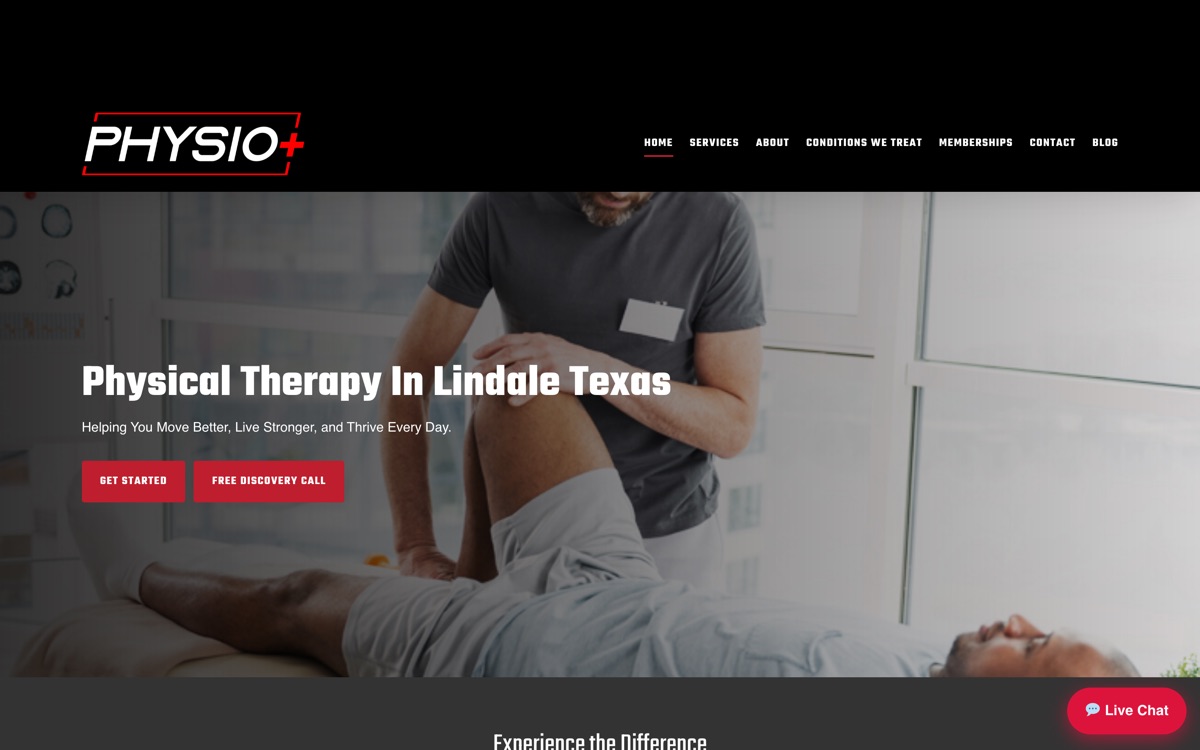
The before was a Squarespace template with stock copy and two flat CTAs: nothing for a visitor to trust, nothing for a crawler to understand. The after opens with a cinematic anatomical intro, an operator-grade headline, and a $99 audit front door. Acquisition starts with a first impression that converts and a page structure machines can read.
Before
After

02
Condition pillar pages: where SEO, AEO, and GEO actually live
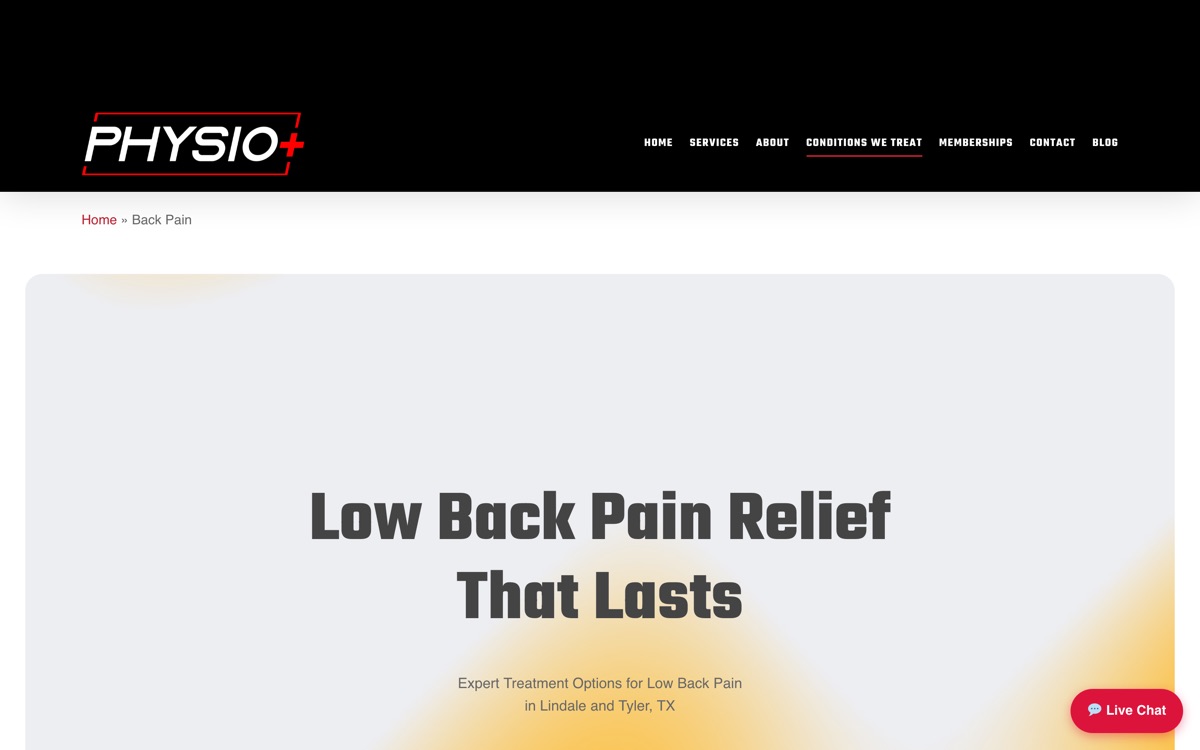
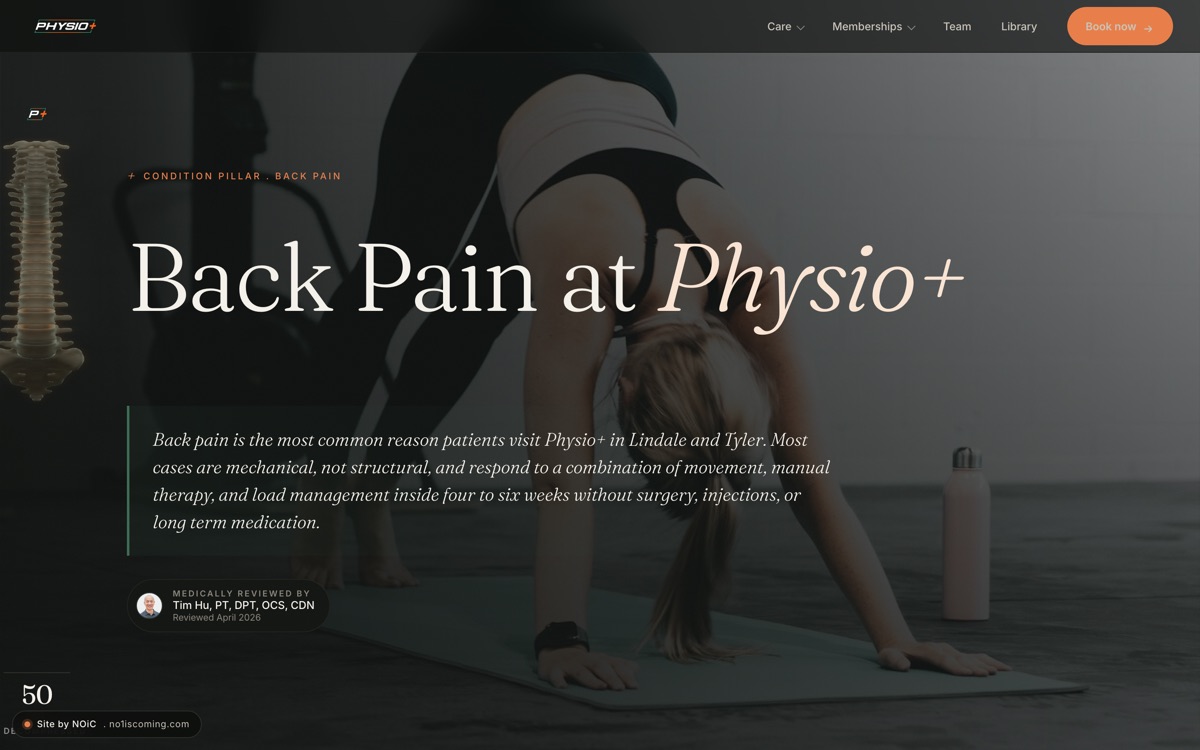
This is the piece most operators have never heard of. Google and AI engines rank and cite pages that answer one condition deeply, not brochure pages that mention everything. Physio+ shipped 8 dedicated condition pillars (back, neck, shoulder, hip, knee, foot and ankle, elbow, balance), each with medically-reviewed attribution, strict heading hierarchy, and FAQ schema. When someone asks ChatGPT or Google who treats back pain in East Texas, these are the pages that get cited. This is the single biggest reason the practice went from invisible to #1.
Before
After
03
The booking flow: where acquisition converts
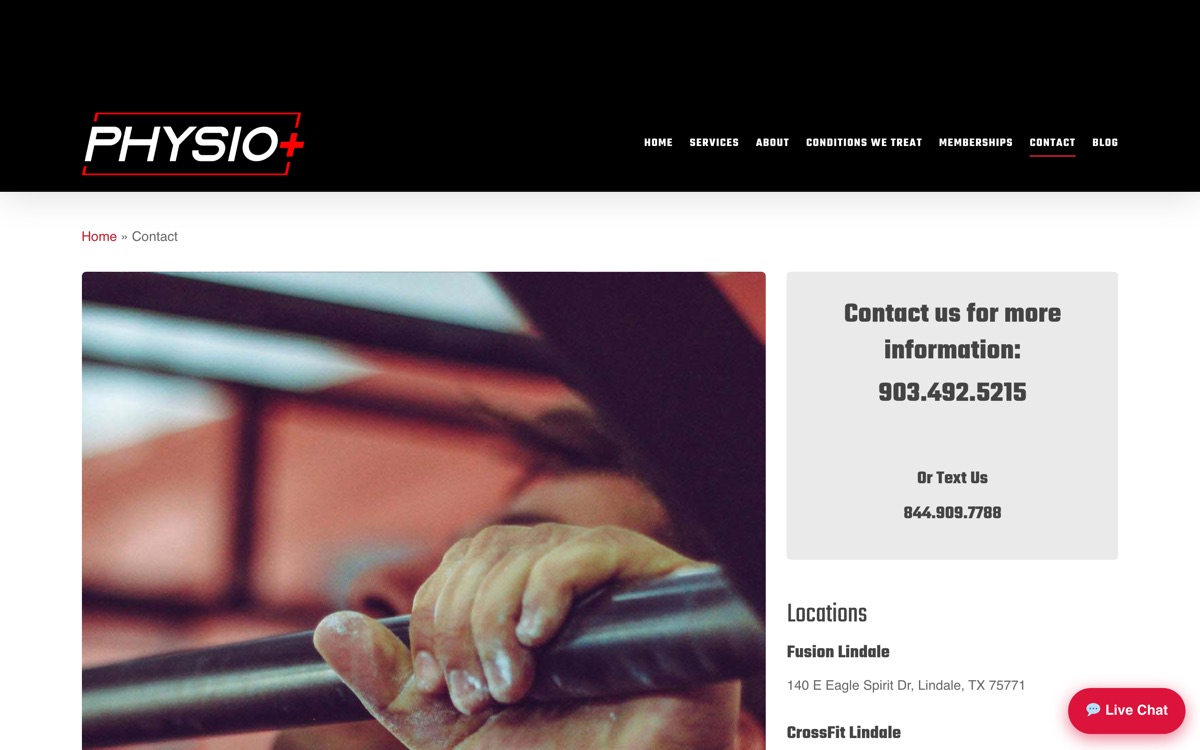
The before sent every prospect to one generic red book-now button. The after gives every doctor of physical therapy a tabbed bio with credentials, specialties, and an embedded calendar, so the visitor picks a provider and a time without leaving the page. Rankings bring the visitor; this surface turns them into a patient.
Before
After
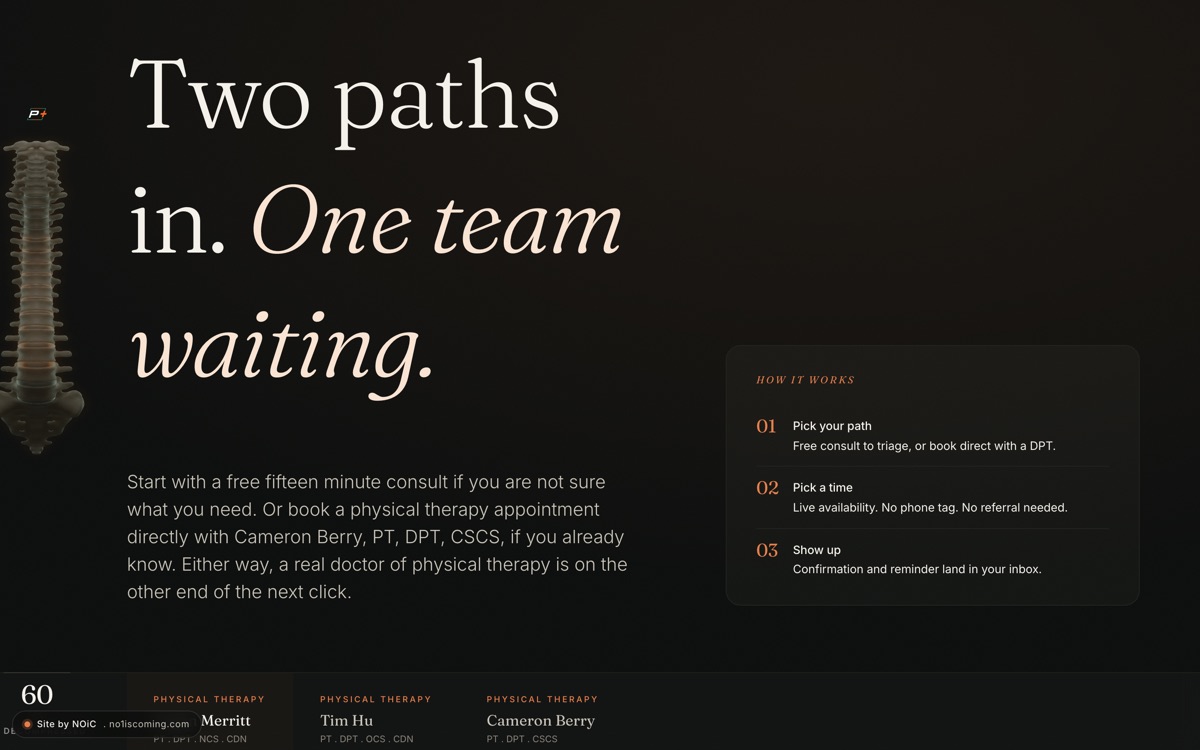
04
The article library: where AI identification compounds
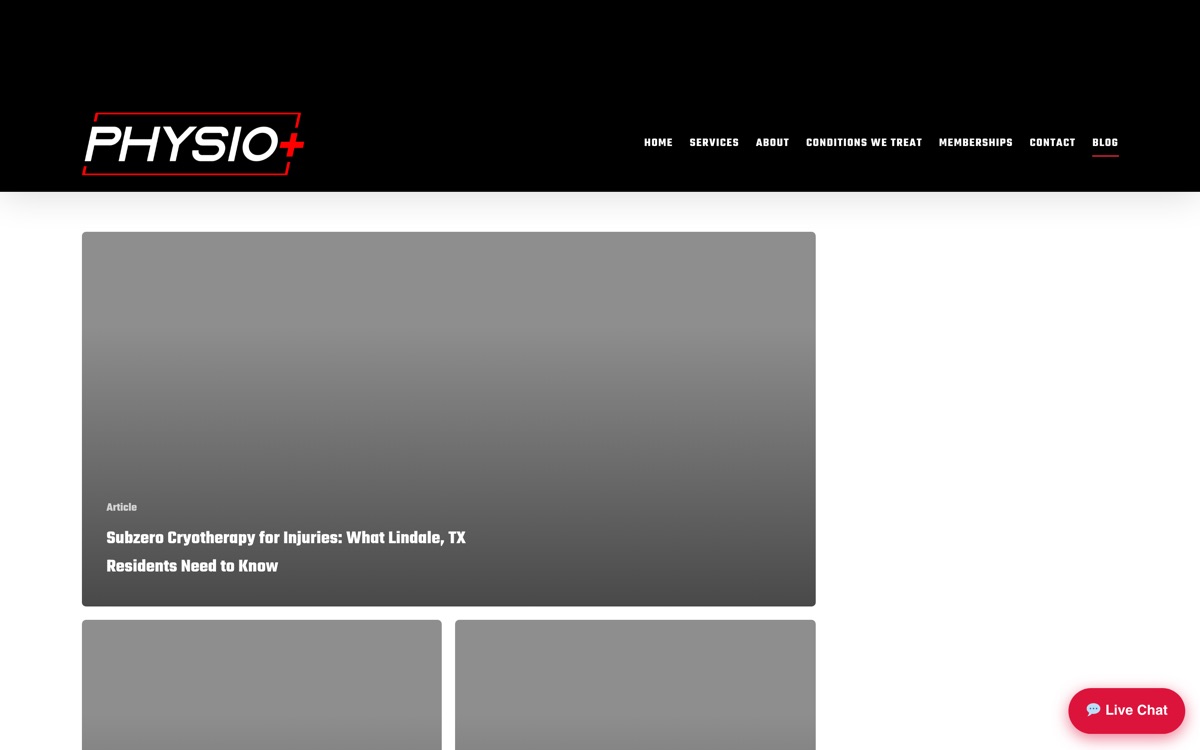
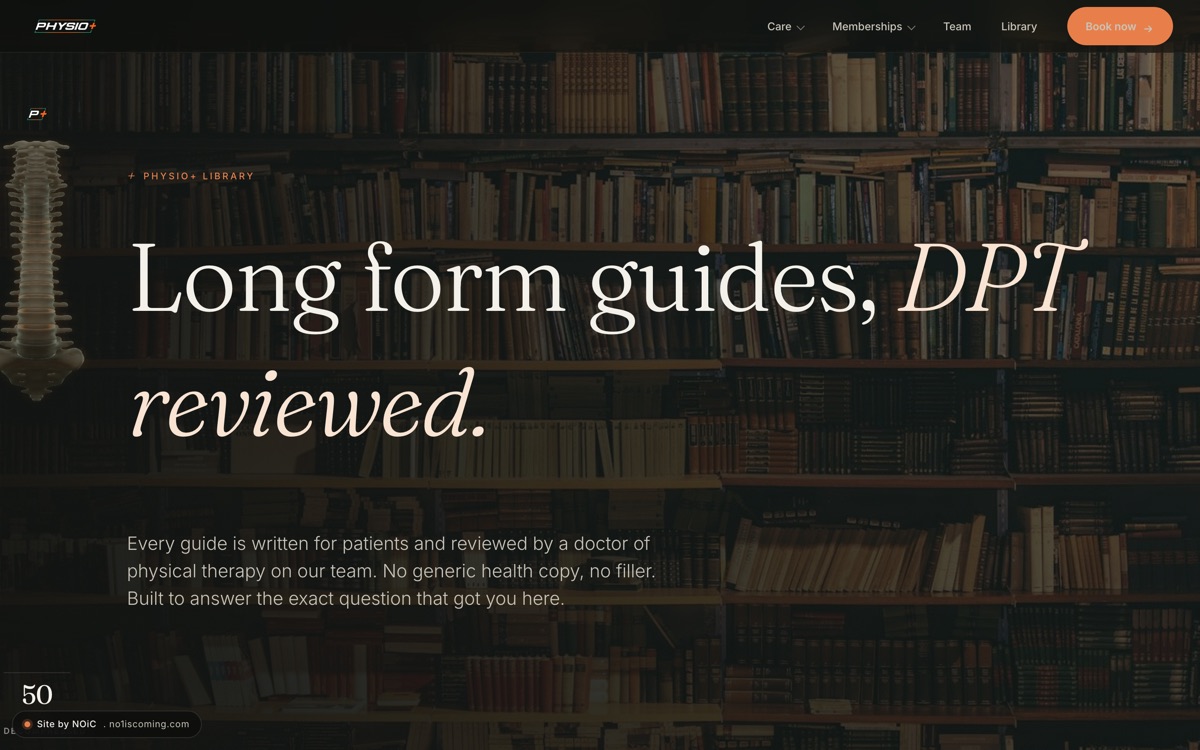
The before blog was a thin list with stock photos that no engine would ever cite. The after is a 23-article library with real clinic imagery, article schema, and condition cross-links: every post written with the heading hierarchy and inline FAQ blocks that ChatGPT, Perplexity, Gemini, and Google AI Overviews pull answers from. Each article deepens the topical authority of the pillar pages above it. This is how a three-clinic practice becomes the entity AI engines identify with physical therapy in its market.
Before
After
05
Compliance: where the carriers and the trust signals check
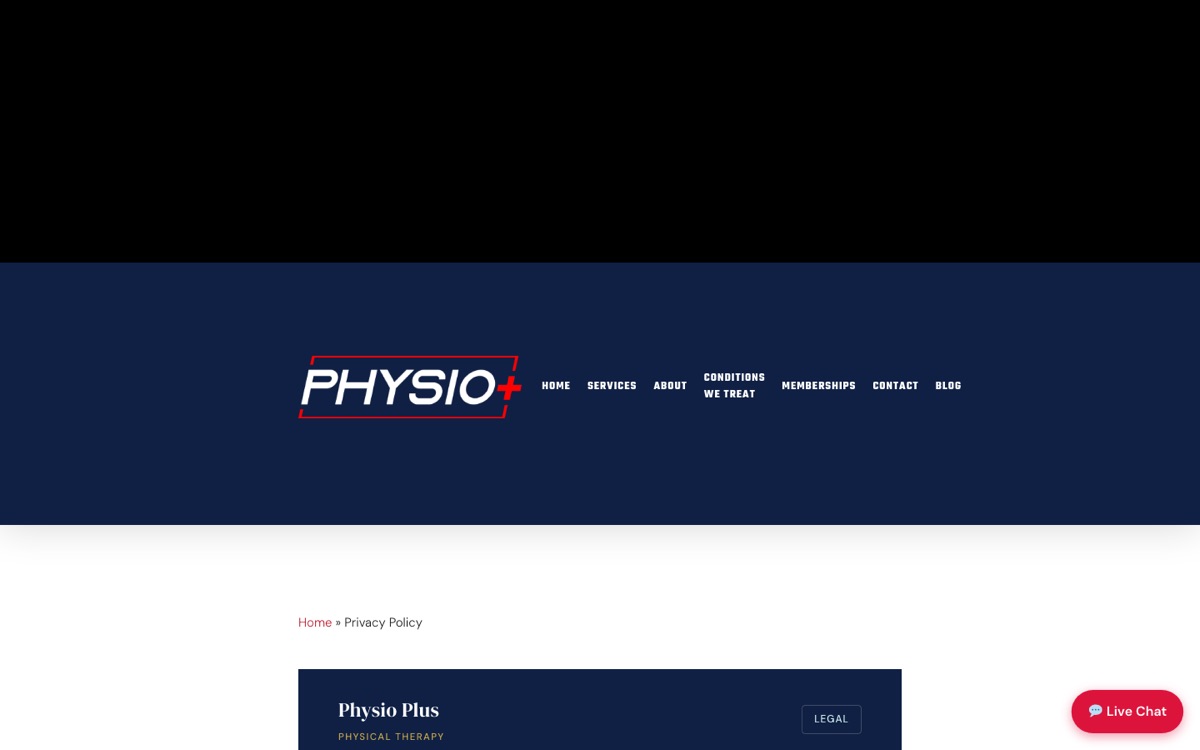
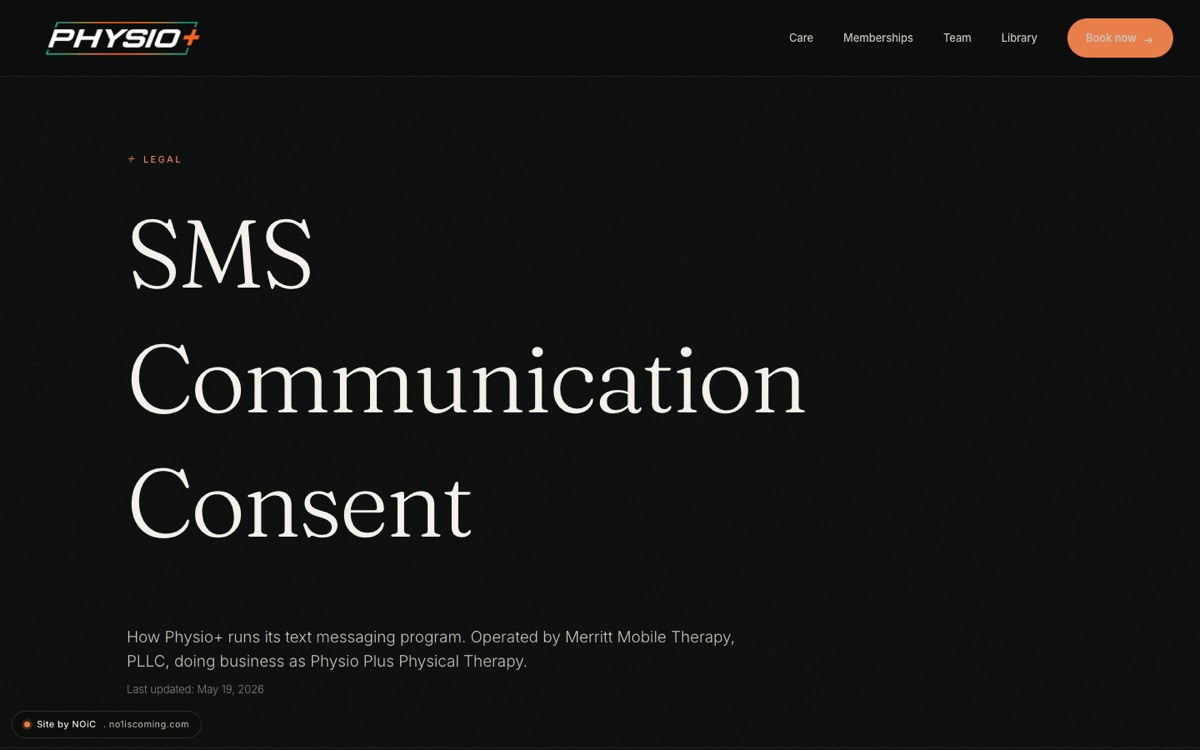
The before shipped a stock privacy page and a templated chat widget with no SMS opt-in flow. The after ships carrier-grade A2P 10DLC compliance: a dedicated SMS consent page, CTIA-mandated language, and a proper opt-in checkbox, built to pass Twilio and TCR registration on first submission. Compliance pages are also trust signals that engines read.
Before
After
This is the same playbook the Embedded Operator engagement installs, and the same method behind the Teardown. The framework is documented in the cash-based PT scaling article and the 2026 AI search guide.
More proof
Two more engagements, written up in full.
Kingdom Health
Men's telehealth, founded by 4x Mr. Olympia Jay Cutler. Zero to multi-million in annual revenue in 12 months under direct NOiC operation. The full write-up covers the acquisition system, the retention build, and the org design.
Premier Hormone Health
Hormone and wellness practice. Revenue doubled with churn controlled, and 8 to 12 percent of monthly revenue recovered from failed payments. The full write-up covers the finance infrastructure.
The questions this page answers
Why sites stay invisible, and how this one stopped.
- Why is my business not showing up on Google?
- Usually because the site gives Google nothing to rank: no dedicated pages for the services people search, no structured data telling engines what the business is, and no content depth signaling authority. A template site with a services list is invisible to the systems that route customers. Physio+ had exactly this profile before the rebuild: a real practice with three locations that search engines effectively could not see. The fix is structural: dedicated pillar pages per service or condition, schema markup for the business and its providers, and a content library that builds topical authority.
- What is a pillar page and why does it matter for ranking?
- A pillar page covers one service or condition completely on its own URL: what it is, who it is for, what treatment looks like, with FAQ blocks and proper heading structure. Google and AI engines rank and cite deep single-topic pages, not brochure pages that mention everything. Physio+ shipped 8 condition pillars (back, neck, shoulder, hip, knee, foot and ankle, elbow, balance), and those pages are the single biggest reason the practice went from not findable to #1. Most small business sites have zero pillar pages, which is why they lose to competitors who have them.
- How long does it take to rank #1 on Google for local services?
- With the full structure in place (pillar pages, schema, a supporting article library, and clean technical execution), a local or regional service business can move from invisible to top rankings in roughly 60 to 180 days depending on competition. Physio+ launched its rebuild in May 2026 and reached #1 for its core services in its market. National head terms take longer and depend on backlinks; local and condition-specific queries move much faster because most competitors have thin pages.
- How do I get ChatGPT and Google AI Overviews to recommend my business?
- AI engines cite businesses whose sites are structured for machine reading: schema markup identifying the organization, its locations, and its providers, FAQ blocks that answer questions in liftable form, and articles with strict heading hierarchy. The Physio+ rebuild shipped all three, which is why the practice is identifiable to AI engines as the physical therapy entity in its market. A beautiful site with none of this is invisible to AI answers no matter how good the business is.
- Is a rebuild like this part of the Embedded Operator engagement?
- They are separate but connected. The Embedded Operator engagement ($7,997 per month) builds the acquisition system: personas, offer architecture, the visibility roadmap, and the measurement layer, and stays on as fractional COO. A ground-up site rebuild like Physio+ is a web studio project scoped separately, and the Teardown ($197) is the entry point that shows exactly where your current site is losing rankings and citations. Many engagements start with the diagnostic, then sequence the rebuild and the operator work from what it finds.
Want to be the next one on this page?
The Embedded Operator engagement is the same operator, the same playbook, inside your business. $7,997 per month, embed build included, 6 month initial term.
See the Embedded Operator →